


Are Smaller Schools Better?
Singapore is home to some of the world’s most respected British international schools, attracting families from across the globe seeking a high-quality education, internationally recognised qualifications, and strong university pathways.
Traditionally, many parents have associated larger schools with greater prestige. Expansive campuses, extensive facilities, and enrolments numbering in the thousands have long been seen as indicators of quality. However, a growing number of families are beginning to ask a different question:
Does a larger school necessarily provide a better educational experience for every child?
Increasingly, the answer appears to be no.

The Shift Towards Personalisation
Education has evolved significantly over the past decade. Parents today are looking beyond league tables and facilities to understand how a school will support their child’s individual needs, strengths, and aspirations.
In larger schools, students can benefit from a wide range of activities and resources. However, some families find that larger student populations can make it more challenging for every child to receive personalised attention.
Smaller and more boutique schools, by contrast, often provide an environment where teachers know students exceptionally well, allowing them to tailor support, challenge, and guidance more effectively.
For students who thrive on strong relationships, mentorship, and individual encouragement, this personalised approach can make a meaningful difference to both confidence and academic performance.
Quality Over Quantity
When evaluating British international schools in Singapore, many parents naturally focus on facilities and campus size. While these factors are important, they are only part of the picture.
Increasingly, families are placing greater value on:
- Small class sizes in a boutique environment
- Access to teachers
- Personalised university guidance
- Individual wellbeing support
- Leadership opportunities
- Strong teacher-student relationships
These factors can have a significant impact on a student’s overall educational experience and future outcomes.
In a smaller school environment, students often have greater opportunities to participate in leadership roles, represent the school, contribute to initiatives, and develop confidence in ways that can sometimes be more competitive in larger institutions.
Preparing Students for a Changing Future
The future workplace is changing rapidly. Universities and employers are increasingly seeking students who can think critically, solve complex problems, communicate effectively, and adapt to new technologies.
As a result, many parents are looking for schools that combine academic rigour with real-world industry exposure.
This has led to growing interest in schools that provide opportunities for students to engage with industry professionals, explore emerging fields such as artificial intelligence and entrepreneurship, and develop practical skills alongside academic qualifications.
For students interested in STEM, business, medicine, engineering, or technology-related careers, these experiences can help bridge the gap between classroom learning and future aspirations.
A More Connected School Community
Another reason smaller schools are gaining popularity is the sense of community they can create.
In a more intimate environment, students often build stronger connections with peers, teachers, and families. Parents frequently appreciate the ability to develop meaningful relationships with educators and feel closely involved in their child’s educational journey.
For expatriate families relocating to Singapore, this sense of belonging can be particularly valuable as children adapt to a new country, culture, and school environment.
Finding the Right Fit
Ultimately, there is no single “best” British international school in Singapore. The right choice depends on your child’s personality, learning style, interests, and long-term goals.
For some students, a large campus with thousands of peers may be the ideal environment. For others, a smaller school offering personalised learning, close mentorship, and strong academic support may be a better fit.
As families evaluate their options, many are discovering that educational quality is not defined by the size of a school, but by the opportunities, relationships, and outcomes it provides.
Prominent British International Schools in Singapore
Singapore is home to several highly-rated British international schools that offer the English National Curriculum, (I)GCSEs, and the A-Levels or the International Baccalaureate (IB). Some of these schools include:
- Tanglin Trust School: The oldest British international school in Southeast Asia, offering dual post-16 pathways (A-Levels and IBDP).
- Dulwich College: Known for its rigorous academic programs, (I)GCSEs, and the IB Diploma.
- Brighton College: Offers a highly holistic British curriculum with a dual-language Mandarin program in the early years.
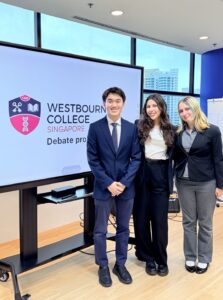
- Westbourne College (Singapore): Delivers a blend of British academic rigour with Singapore-strengthened Maths and Science, offering the IBDP.
Conclusion
Singapore offers an exceptional range of British international schools, each with its own strengths and educational philosophy. As parents increasingly prioritise personalised learning, individual attention, and bespoke preparation for university and future careers, smaller schools are becoming an increasingly attractive option.
The best way to determine whether a school is right for your child is to visit in person via a tour or open house, meet the teachers, and experience the culture firsthand. Often, it is these everyday interactions – not the size of the campus – that ultimately will have the greatest impact on your child’s success and happiness.
All the best for your journey ahead.